


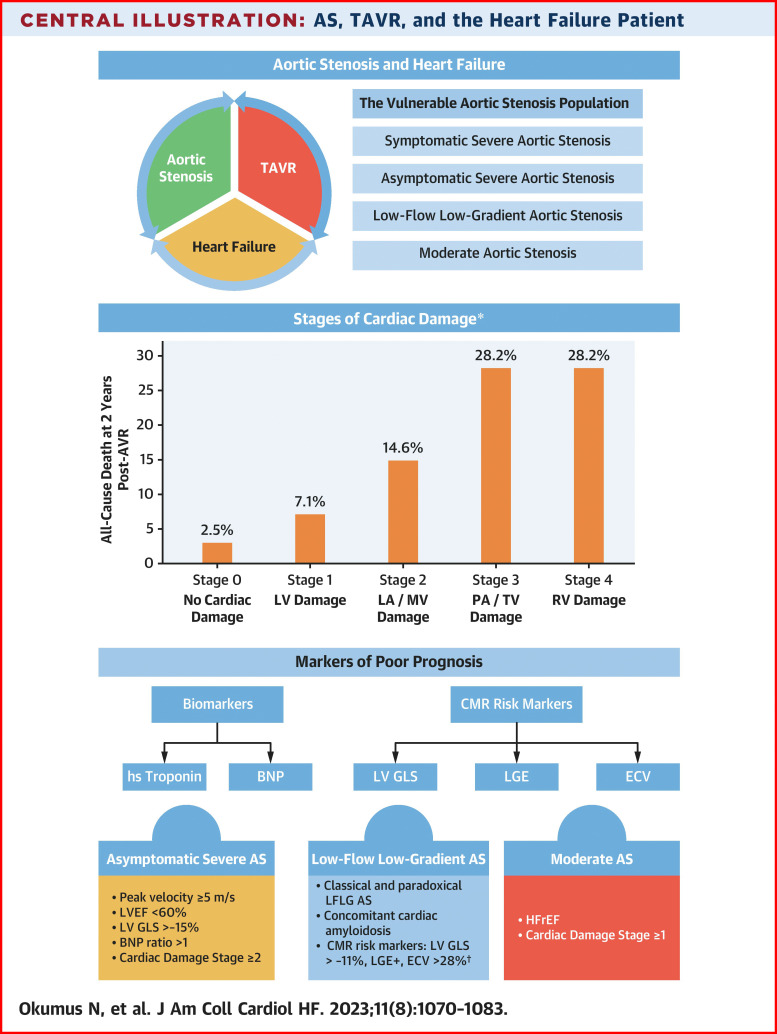
Aortic Valve Disease, Transcatheter Aortic Valve Replacement, and the Heart Failure Patient: A State-of-the-Art Review
Source : https://www.sciencedirect.com/science/article/abs/pii/S221317792300389X?via=ihub
Concomitant aortic stenosis (AS) in heart failure (HF) is associated with high rates of mortality and morbidity. Current guidelines recommend aortic v...
Conclusions/Relevance: This review aims to comprehensively examine the phenotypes of AS in the context of HF progression, while exploring the evolving role of TAVR in specific populations.

Coronary Embolism After Transcatheter Aortic Valve Replacement-Case Series and Review of Literature - PubMed
Source : https://pubmed.ncbi.nlm.nih.gov/37611416/
Periprocedural systemic embolism is a well-documented complication of transcatheter aortic valve replacement (TAVR). Although the most focus was given to cerebral embolism (which remains unpredictable, difficult to prevent, and a...
Conclusion: We suggest that TAVR-associated coronary embolism has a much higher prevalence than previously documented. Further studies are warranted to properly assess the prevalence and impact of this phenomenon.
Impact of leaflet thrombosis on valve haemodynamic status after transcatheter aortic valve replacement
Source : https://heart.bmj.com/content/early/2023/08/15/heartjnl-2023-322946
Objectives The effect of subclinical leaflet thrombosis, characterised by hypoattenuated leaflet thickening (HALT), on the valve haemodynamic function and durability of the bioprosthetic valve, is not yet determined. We determined...
Conclusions: In patients who had undergone successful TAVR, aortic valve haemodynamic status was not influenced by the presence of HALT. Although HALT was not a predictor of haemodynamic SVD at 6 months, it warrants further longer-term follow-up to evaluate the effect on long-term valve durability.
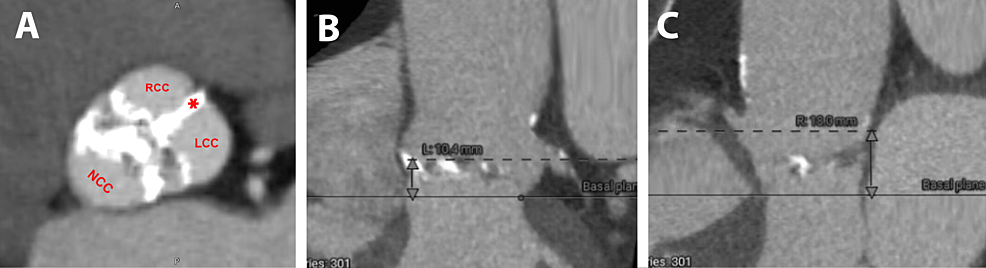
Successful Transcatheter Aortic Valve Replacement in an Elderly Patient with Calcified Bicuspid Aortic Valve with Calcified Raphe: A Case Report
At present, transcatheter aortic valve replacement (TAVR) is not only used in high-surgical-risk patients with aortic stenosis (AS), but its use has also been extended to low-risk patients, resulting in...
Conclusions: Our case report describes a single patient experience and cannot definitively address the overall risk-benefit ratio of TAVR in BAV patients with similar characteristics. Randomized clinical trials are necessary to further elucidate these complex relationships and to optimize procedural and post-procedural management. Despite...

Carotid Stiffness After Transcatheter Aortic Valve Replacement - PubMed
Source : https://pubmed.ncbi.nlm.nih.gov/37571920/
The present study aimed to analyze common carotid artery strain properties in patients (n = 59) with severe aortic valve stenosis who underwent transcatheter aortic valve replacement (TAVR). Arterial compliance...
Conclusions/Relevance: TAVR led to a reduction of arterial wall stiffness of the common carotid artery assessed by ultrasound speckle-tracking. The decrease of arterial wall stiffness after TAVR was more pronounced in more severe aortic valve stenosis.