


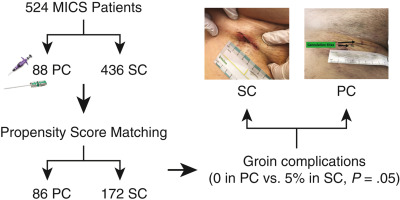
Percutaneous versus open surgical cannulation for minimal invasive cardiac surgery; immediate postprocedural outcome analysis
Source : https://www.jtcvstechniques.org/article/S2666-2507(22)00462-X/fulltext
Open surgical cannulation (SC) is traditionally used for cardiopulmonary bypass cannulation in minimally invasive cardiac surgery (MICS). The percutaneous cannulation (PC) technique using arterial closure devices has also been used...
Conclusions: The PC approach is a safe cannulation technique for patients undergoing MICS. It minimizes postoperative groin complications with no obvious negative impact on outcomes.

Myeloperoxidase Levels in Pericardial Fluid Is Independently Associated with Postoperative Atrial Fibrillation after Isolated Coronary Artery Bypass Surgery - PubMed
Source : https://pubmed.ncbi.nlm.nih.gov/36498593/
The .gov means it's official. Federal government websites often end in .gov or .mil. Before sharing sensitive information, make sure you're on a federal government site. The site is secure....
Conclusions: Higher intraoperative pericardial fluid MPO levels are linked with POAF in patients undergoing CABG. This finding provides insight into a possible mechanism of MPO in pericardial fluid increase susceptibility to developing POAF in patients undergoing CABG.
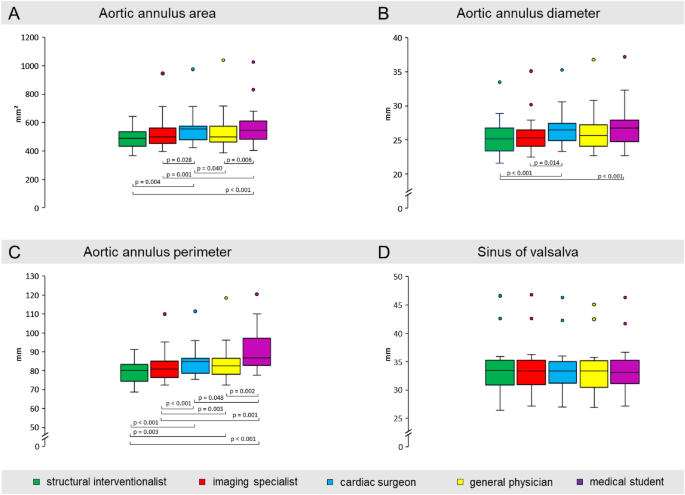
Impact of observer experience on multi-detector computed tomography aortic valve morphology assessment and valve size selection for transcatheter aortic valve replacement - Scientific Reports
Source : https://www.nature.com/articles/s41598-022-23936-w
Transcatheter aortic valve replacement (TAVR) has become the standard treatment for aortic stenosis in older patients. It increasingly relies on accurate pre-procedural planning using multidetector computed tomography (MDCT). Since little...
Conclusion/Relevance: While current state-of-the-art MDCT analysis software provides excellent reproducibility for anatomical measurements, the highest levels of confidence in terms of valve size selection were achieved by the performing interventional physicians. This was most likely attributable to observer experience.
Conclusions: Data from real-world practice showed low and comparable rates of complications after TAVI considering all the available devices. Patients receiving SAPIEN 3 valve had lower rates of paravalvular regurgitation and permanent pacemaker implantation, but higher transprosthetic gradients.
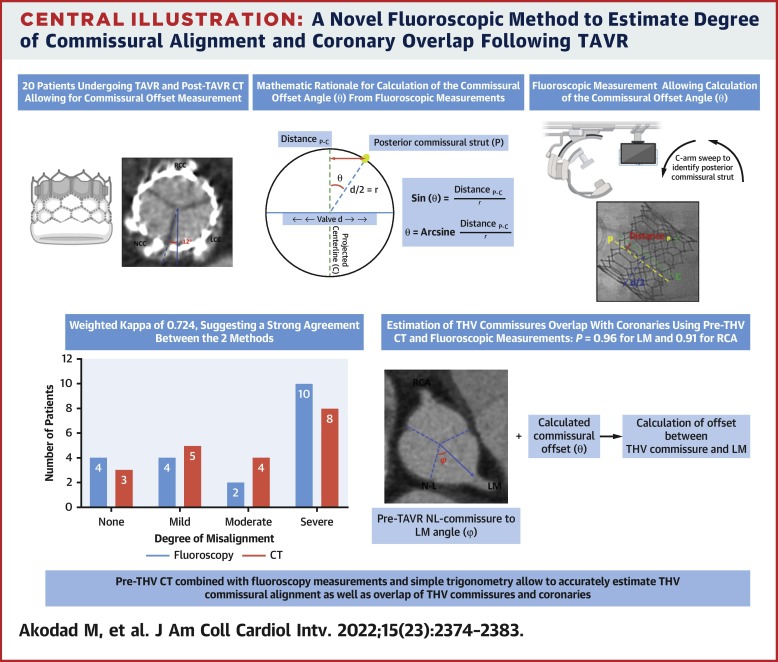
Quantification of Commissural Alignment of Balloon-Expandable THV on Fluoroscopy: A Comparison Study With Post-TAVR CT
Source : https://www.sciencedirect.com/science/article/abs/pii/S1936879822015497?via=ihub
Coronary access may be challenging following transcatheter aortic valve replacement (TAVR) in the setting of transcatheter heart valve (THV) commissur...
Conclusions: The degree of commissural alignment of the balloon-expandable THV can be reliably assessed and quantified on postdeployment fluoroscopy using a standardized 3-cusp view and trigonometry-based analysis.