



Common Carotid Artery Stenosis Degree as a Predictor of Cardiovascular Disease in a General Population: the Suita Study
Source : https://pubmed.ncbi.nlm.nih.gov/38116928/
The degree of CCA stenosis may be used as a predictive marker for the development of CVD in the general population.
Degree of CCA stenosis was associated with increased risks of incident CVD, coronary heart disease, and stroke.

Antithrombotic Therapy in Patients After Transcatheter Aortic Valve Implantation: a Network Meta-Analysis
The optimal antithrombotic therapy to balance the risk of thrombosis and bleeding in patients who undergo transcatheter aortic valve implantation
The combination of oral anticoagulant plus single antiplatelet therapy increased the risk of all-cause death compared with dual antiplatelet therapy. No other comparisons for all-cause death were significantly different.

Routine 4D Cardiac CT to Identify Concomitant Transthyretin Amyloid Cardiomyopathy in Older Adults With Severe Aortic Stenosis
Source : https://pubmed.ncbi.nlm.nih.gov/38085082/
Transthyretin amyloid cardiomyopathy (ATTR-CM) often coexists with severe aortic stenosis (AS). Although strain analysis from cardiac MRI and echocardiography was demonstrated to predict coexisting ATTR-CM, comparable data from four-dimensional (4D)...
Routine 4D cardiac CT in older adults considered for TAVI provided high diagnostic performance in the detection of concomitant ATTR-CM by assessing LV and left atrial GLS, relative apical longitudinal strain, and LV mass index.
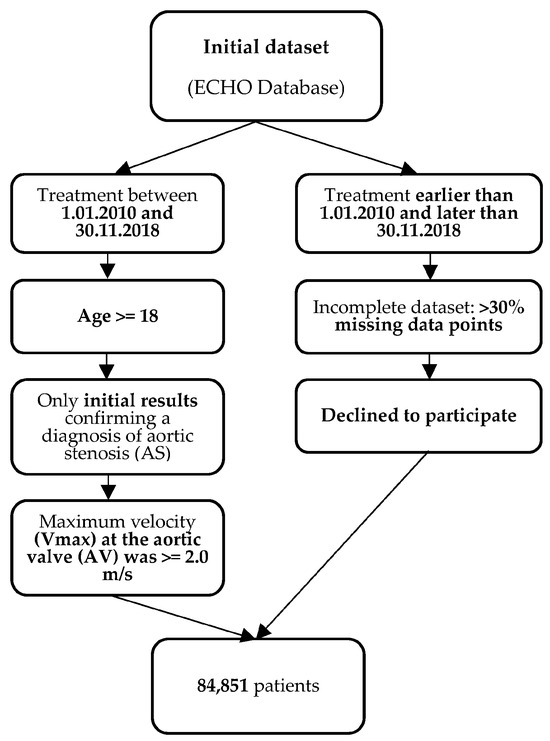
Analysis of Prevalence and Clinical Features of Aortic Stenosis in Patients With and Without Bicuspid Aortic Valve Using Machine Learning Methods
Source : https://www.mdpi.com/2075-4426/13/11/1588
Aortic stenosis (AS) is the most commonly diagnosed valvular heart disease, and its prevalence increases with the aging of the general population. However, AS is often diagnosed at a severe...
Age was identified as the primary factor associated with AS formation, and aortic dilatation, hypertension, congenital heart defects, bicuspid aortic valve, and sex were also regarded as significant factors.

Bioprosthetic Valves for Lifetime Management of Aortic Stenosis: Pearls and Pitfalls
Source : https://www.mdpi.com/2077-0383/12/22/7063
This review explores the use of bioprosthetic valves for the lifetime management of patients with aortic stenosis, considering recent advancements in surgical (SAV) and transcatheter bioprostheses (TAV). We examine the...
TAVR procedures are appealing even to younger, low-risk patients with considerable life expectancies.