



Emerging Transcatheter Heart Valve Technologies for Severe Aortic Stenosis
Source : https://pubmed.ncbi.nlm.nih.gov/37933200/
The incidence of degenerative aortic stenosis is expected to increase with more aging of the population. Therefore, TAVI needs to meet this increase in the number of patients indicated for...
International researchers suggest that optimized TAVI practice and obtaining the best outcomes might be achieved through adopting a patient’s specific procedure planning and device selection.
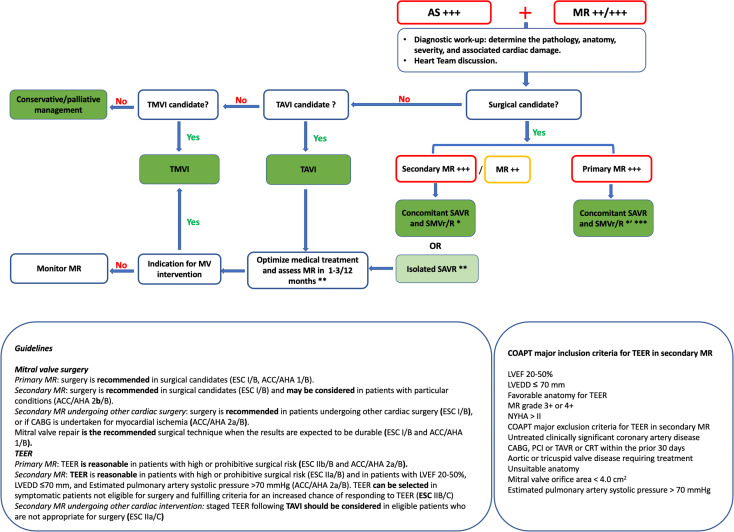
Combined Significant Aortic Stenosis and Mitral Regurgitation: Challenges in Timing and Type of Intervention
Source : https://onlinecjc.ca/article/S0828-282X(23)01877-9/fulltext
In this narrative review, we aim to summarize the literature surrounding the assessment and management of the common, yet understudied combination of aortic stenosis (AS) and mitral regurgitation (MR), the...
The advent and expansion of relatively low-risk transcatheter interventions for both valves are likely to change the management paradigm of concomitant AS and MR, offering flexibility of controlled timing and and the opportunity to examine the clinical benefit of early intervention.

Progressive Changes in Residual Gradient After Aortic Coarctation Repair and Its Role in the Prediction of Reintervention: a Longitudinal Data Analysis
Source : https://www.ncbi.nlm.nih.gov/pmc/articles/PMC10593279/
Repair of aortic coarctation through left thoracotomy is the standard treatment when anatomically feasible. Long-term outcomes are well studied, including the need for reintervention.
The estimated peak gradient (ePG) acquired in the first postoperative transthoracic echocardiography by cw-Doppler is the most important predictor for reinterventions. The presence of a ventricular septal defect is associated with decreased ePGs.
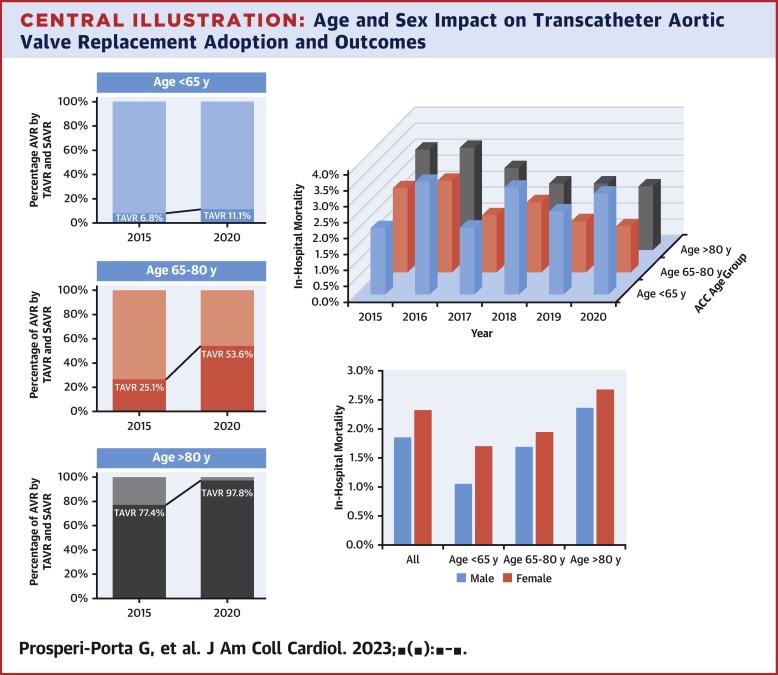
Association of Age and Sex With Use of Transcatheter Aortic Valve Replacement in France
Source : https://www.sciencedirect.com/science/article/abs/pii/S0735109723066494?via=ihub
Current guidelines recommend selecting surgical aortic valve replacement (SAVR) or transcatheter aortic valve replacement (TAVR) based on age, comorbidities, among others.
In France, TAVR use in young patients has remained uncommon and is performed in a subset with higher CCI and with higher in-hospital mortality rates compared with older patients, suggesting that TAVR is predominantly used in high-risk young patients.

Prevalence and Clinical Outcomes of Non-Cardiac Surgery After Transcatheter Aortic Valve Replacement
Source : https://pubmed.ncbi.nlm.nih.gov/37875233/
Non-cardiac surgery after TAVR can be performed safely and does not have a negative impact on prognosis. Further studies are warranted to determine the optimal strategy for non-cardiac surgery post-TAVR.
There was no observed structural valve deterioration, and the incidence of composite endpoints did not significantly differ between the surgical and nonsurgical groups. Noncardiac surgery after transcatheter aortic valve replacement can be performed safely and does not have a negative impact on prognosis.