


Outcomes of SAPIEN 3 Transcatheter Aortic Valve Replacement Compared With Surgical Valve Replacement in Intermediate-Risk Patients
Source : https://www.sciencedirect.com/science/article/abs/pii/S0735109723055900?via=ihub
Previous studies demonstrated transcatheter aortic valve replacement (TAVR) with an earlier generation balloon-expandable valve to be noninferior to s...
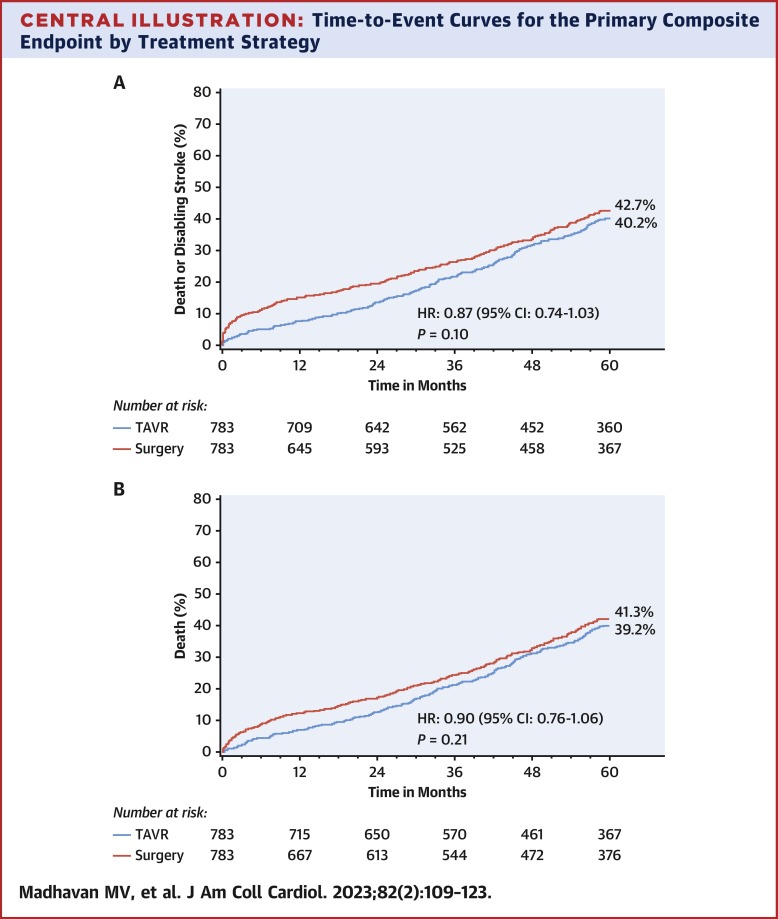
Conclusions: In this propensity-matched analysis of intermediate-risk patients, 5-year rates of death and disabling stroke were similar between S3 TAVR and SAVR. Rates of structural valve deterioration–related hemodynamic valve deterioration were similar, but paravalvular regurgitation was more common after S3 TAVR. Longer-term follow-up is needed to further evaluate differences in late adverse clinical events and bioprosthetic valve durability.
• Source: Journal of the American College of Cardiology
• Conclusions: “In this propensity-matched analysis of 783 matched pairs of intermediate-risk patients with severe, symptomatic AS who underwent aortic valve replacement, rates of death and disabling stroke were similar between S3 TAVR and SAVR at 5 years. Early disabling stroke was more common after SAVR, whereas late nondisabling stroke occurred more frequently after S3 TAVR. Additional studies with longer-term follow-up are required to provide better mechanistic insights regarding adverse clinical outcomes.”
• Previous research suggest that TAVR with an earlier generation balloon-expandable valve is noninferior to SAVR in terms of death and disabling stroke among intermediate-risk patients with symptomatic, severe aortic stenosis at 5 years.
• In the current study of intermediate-risk patients, the 5-year rates of death and disabling stroke were comparable between S3 TAVR and SAVR, with similar rates of structural valve deterioration–related hemodynamic valve deterioration. However, paravalvular regurgitation occurred more frequently following S3 TAVR.