



Racial Differences in Low Natriuretic Peptide Levels: Implications for Heart Failure Clinical Trials
Source : https://www.sciencedirect.com/science/article/abs/pii/S0002870323001631?via=ihub
Some patients with heart failure (HF) have low natriuretic peptide (NP) levels. It is unclear whether specific populations are disproportionately excl...
Conclusions: Nearly 10% of patients hospitalized with HF have unexpectedly low BNP levels. Simulating inclusion into a prototype HFpEF RCT demonstrated that requiring increasingly elevated NP levels disproportionately excludes Black patients.
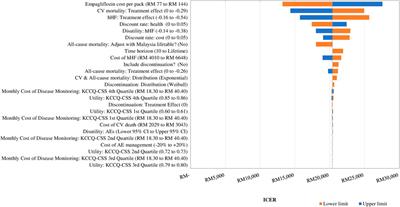
Cost-effectiveness of adding empagliflozin to the standard of care for patients with heart failure with reduced ejection fraction from the perspective of healthcare system in Malaysia
Source : https://www.frontiersin.org/articles/10.3389/fphar.2023.1195124/full
Objective: The aim of this study was to determine the cost-effectiveness of adding empagliflozin to the standard of care versus SoC alone for the treatment of patients with heart failure...
Conclusion: Empagliflozin + SoC compared to SoC alone for the treatment of HFrEF patients was cost-effective from the perspective of the MoH of Malaysia.

Clinical characteristics and outcomes in Asian patients with heart failure with mildly reduced ejection fraction
Source : https://journals.lww.com/smj/Abstract/9000/Clinical_characteristics_and_outcomes_in_Asian.99905.aspx
rEF) and preserved ejection fraction (HFpEF). Methods: Patients admitted nationally for HF between 2008 and 2014 were included in the study. They were categorised according to ejection fraction (EF). Patients...
Conclusion: HFmrEF patients account for a significant burden of patients with HF. HFmrEF represents a distinct HF phenotype with high atherosclerotic burden and clinical outcomes saddled in between those of HFrEF and HFpEF. Further therapeutic studies to guide management of this challenging group of patients are warranted.

Prescribing patterns and factors associated with sodium-glucose cotransporter-2 inhibitor prescribing in patients with diabetes mellitus and atherosclerotic cardiovascular disease - PubMed
Source : https://pubmed.ncbi.nlm.nih.gov/37311594/
We found that 1 in 5 patients with diabetes and atherosclerotic CVD were prescribed SGLT2 inhibitors in 2019/20, whereas statins were prescribed for 4 of every 5 patients. Although SGLT2...
Interpretation: We found that 1 in 5 patients with diabetes and atherosclerotic CVD were prescribed SGLT2 inhibitors in 2019/20, whereas statins were prescribed for 4 of every 5 patients. Although SGLT2 inhibitor prescribing increased over the study period, disparities in adoption by age, sex, socioeconomic status, comorbidities and physician...

Noncardiovascular morbidity and mortality across left ventricular ejection fraction catefories following hospitalization for heart failure
Source : https://www.sciencedirect.com/science/article/abs/pii/S1885585723001585?via=ihub
Introducción y objetivos: Los eventos no cardiovasculares son una importante causa de morbimortalidad en pacientes con insuficiencia cardiaca (IC), pe...
Conclusions: Following an admission for HF, LVEF status was directly associated with the risk of noncardiovascular morbidity and mortality. Patients with HFpEF were at higher risk of noncardiovascular death and total noncardiovascular readmissions, especially those with LVEF ≥ 60%.