


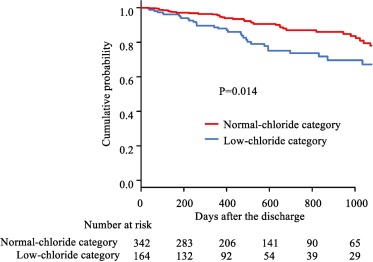
Renin-angiotensin system inhibitor exerts prognostic effects in HFpEF patients with low baseline chloride level
Source : https://www.internationaljournalofcardiology.com/article/S0167-5273(22)01737-5/fulltext
Few interventions have shown improved prognosis in patients with heart failure and preserved ejection fraction (HFpEF). Serum chloride levels, which are affected by serum renin secretion, are associated with the...
Conclusion: RASi administration was associated with an improved prognosis only in HFpEF patients with a low baseline serum chloride level. Clinicians should consider RASi administration if patients' serum chloride levels are low, to improve the long-term prognosis of HFpEF patients.
Conclusions: The authors conclude that the db/db aldosterone model may represent a distinct clinical subgroup of HFpEF that has marked hyperglycemia, obesity, and increased arrhythmia risk. This novel HFpEF model can be useful in future therapeutic testing and should provide unique opportunities to better understand disease pathobiology.

Right ventricular performance in patients with heart failure with mildly reduced ejection fraction: the forgotten ventricle - The International Journal of Cardiovascular Imaging
Source : https://link.springer.com/article/10.1007/s10554-022-02652-6
Right ventricular (RV) function is a major determinant of prognosis and adverse outcomes in patients with heart failure (HF). It is largely unknown if HF with mildly reduced ejection fraction...
Conclusions/Relevance: The present study shows a high prevalence of RV dysfunction in HFmrEF patients. Study findings provides some new insights on RV and LV systolic dysfunction coupling whereas RV diastolic dysfunction was not dependent on LV systolic dysfunction.

Longitudinal CMR assessment of cardiac global longitudinal strain and hemodynamic forces in a mouse model of heart failure - The International Journal of Cardiovascular Imaging
Source : https://link.springer.com/article/10.1007/s10554-022-02631-x
To longitudinally assess left ventricle (LV) global longitudinal strain (GLS) and hemodynamic forces during the early stages of cardiac dysfunction in a mouse model of heart failure with preserved ejection...
Conclusions/Relevance: Our results indicated that hemodynamic forces parameters were the only functional outcome measure that showed distinct temporal differences between groups. As such, changes in hemodynamic forces reflect early alterations in cardiac function which can be of added value in (pre)clinical research on HFpEF.
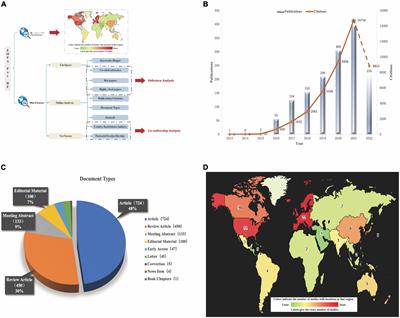
Knowledge domain and emerging trends in empagliflozin for heart failure: A bibliometric and visualized analysis
Source : https://www.frontiersin.org/articles/10.3389/fcvm.2022.1039348/full
ObjectiveEmpagliflozin (EMPA), a sodium-glucose cotransporter 2 inhibitor (SGLT2i), is recommended for all patients with Heart failure (HF) to reduce the risk of Cardiovascular death, hospitalization, and HF exacerbation. Qualitative and...
Conclusion: Based on methods such as bibliometrics, citation analysis and knowledge graph, this study analyzed the current situation and trend of EMPA for Heart Failure, sorted out the knowledge context in this field, and provided reference for current and future prevention and scientific research.