



Predictive effect of nutritional scores assessment for 1-year mortality in patients with severe aortic stenosis treated with SAVR or TAVR - PubMed
Source : https://pubmed.ncbi.nlm.nih.gov/36930487/
In the surgical or transarterial treatment of symptomatic severe aortic stenosis, we found that a high CONUT score and a low PNI score were predictors of all-cause mortality at 1-year...
Conclusions: In the surgical or transarterial treatment of symptomatic severe aortic stenosis, we found that a high CONUT score and a low PNI score were predictors of all-cause mortality at 1-year follow-up, regardless of the type of treatment. We think that checking patients with scores like the abovementioned procedure and making the...

Approach to the Patient with a Suboptimal Statin Response: Causes and Algorithm for Clinical Management
You do not currently have access to this article. Don't already have a personal account? Register Approach to the Patient with a Suboptimal Statin Response: Causes and Algorithm for Clinical...
Conclusions: The evaluation of statin hypo-responsiveness is a multi-step process that can lead to the optimization of lipid-lowering therapy for the prevention of ASCVD. It may also lead to the identification of distinct types of dyslipidemias that require specific therapies and/or the genetic screening of family members.
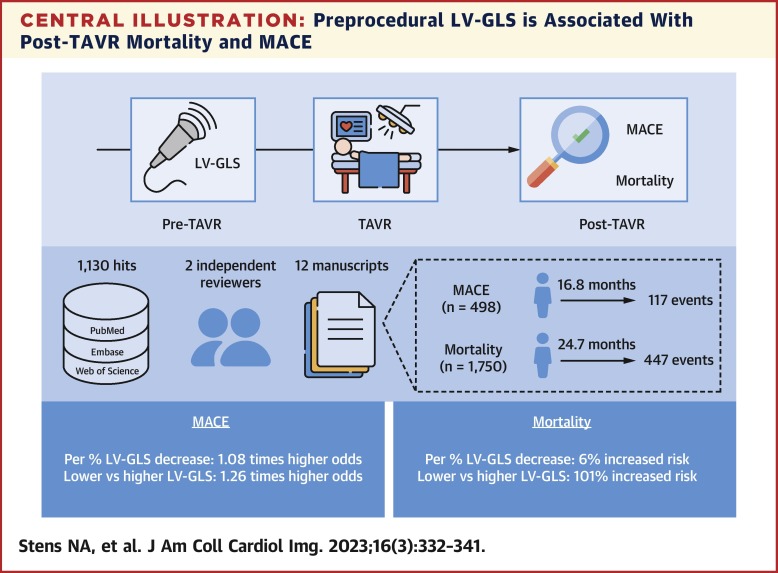
Prognostic Value of Preprocedural LV Global Longitudinal Strain for Post-TAVR-Related Morbidity and Mortality: A Meta-Analysis
Source : https://www.sciencedirect.com/science/article/abs/pii/S1936878X23000360?via=ihub
Left ventricular ejection fraction (LVEF) demonstrates limited prognostic value for post-transcatheter aortic valve replacement (TAVR) outcomes. Evidence regarding the potential role of left ventricular global longitudinal strain (LV-GLS) in this...
Conclusions: Preprocedural LV-GLS was significantly associated with post-TAVR morbidity and mortality. This suggests a potential clinically important role of pre-TAVR evaluation of LV-GLS for risk stratification of patients with severe aortic stenosis.

Glucagon-Like Peptide 1 Receptor Agonists Versus Sodium-Glucose Cotransporter 2 Inhibitors for Atherosclerotic Cardiovascular Disease in Patients With Type 2 Diabetes | Yanai | Cardiology Research
Source : https://cardiologyres.org/index.php/Cardiologyres/article/view/1459
Hidekatsu Yanai, Hiroki Adachi, Mariko Hakoshima, Hisayuki Katsuyama Abstract Beyond improving hemoglobin A1c (HbA1c) in adults with type 2 diabetes, glucagon-like peptide 1 receptor agonists (GLP-1RA) have been approved for...
Conclusions/Relevance: Compared with SGLT2i, GLP-1RA had a higher probability of decreasing serum triglyceride. GLP-1RA have multiple vascular biological anti-atherogenic properties.
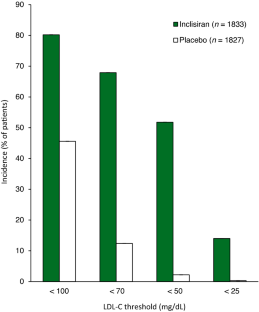
Inclisiran: A Review in Hypercholesterolemia - American Journal of Cardiovascular Drugs
Source : https://link.springer.com/article/10.1007/s40256-023-00568-7
Inclisiran (Leqvio®) is a first-in-class, subcutaneously administered, small interfering RNA (siRNA) that prevents hepatic synthesis of proprotein convertase subtilisin/kexin type 9 (PCSK9), thereby decreasing circulating low-density lipoprotein cholesterol (LDL-C). In...
Conclusions/Relevance: Inclisiran is a potentially valuable additional/alternative antihyperlipidemic agent to a statin because of its infrequent, and therefore more convenient, dosing schedule versus other non-statin LLTs, including anti-PCSK9 monoclonal antibodies.