


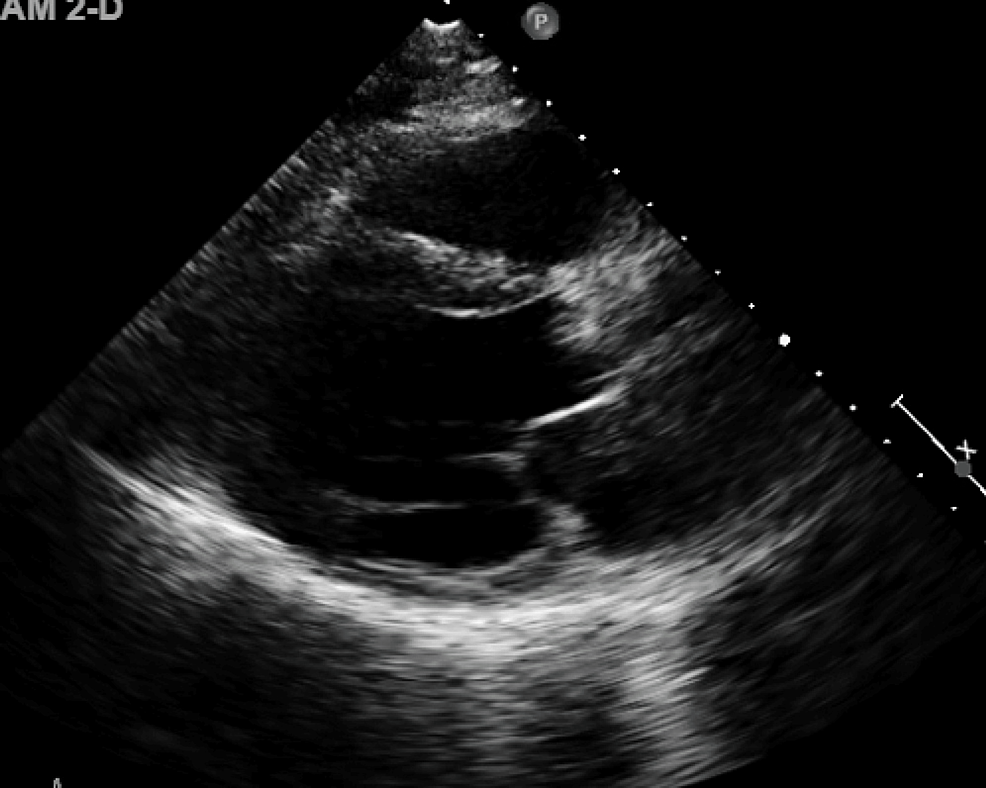
An Unusual Case of Severe Aortic Stenosis and Triple-Vessel Coronary Artery Disease in a Patient Presenting With Intermittent Chest Pain
Although relatively uncommon, premature coronary artery disease (CAD) is a significant cause of mortality and morbidity. A key risk factor for this condition is the presence of familial hyperlipidemia (FH),...
Relevance: This report highlights a case of acute coronary syndrome (ACS) in a young adult and how early detection and treatment of risk factors can lead to a good prognosis.
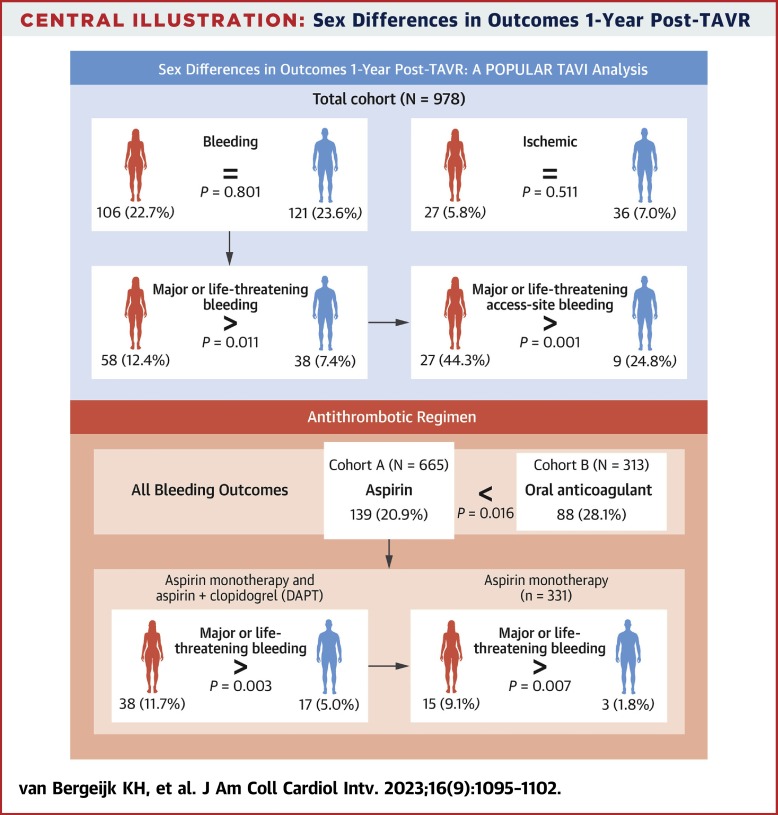
Sex Differences in Outcomes After Transcatheter Aortic Valve Replacement: A POPular TAVI Subanalysis
Source : https://www.sciencedirect.com/science/article/abs/pii/S1936879823005599?via=ihub
The study sought to compare bleeding and ischemic complications after TAVR between women and men stratified by antiplatelet and oral anticoagulant (OAC) regimen. The POPular TAVI (Antiplatelet Therapy for Patients...
Conclusions: After TAVR, overall bleeding and ischemic outcomes were similar between women and men. However, women had more major or life-threatening bleedings, especially those receiving aspirin pre- and post-TAVR.
Reoperation Following Transcatheter Aortic Valve Replacement: Insights From 10-Year Experience
Source : https://www.jtcvs.org/article/S0022-5223(23)00353-7/pdf
Transcatheter aortic valve replacement (TAVR) has demonstrated a dramatic growth in the past decade. This study aims to investigate implications of post-TAVR reoperation from our 10-year experience. Between 2011 and...
Conclusion: Low-/intermediate-risk patients are emerging as the predominant group necessitating reoperations. Native TAVR was associated with post-implant lower reintervention rates, albeit with higher reoperative technical difficulty and mortality. Conversely, VIV-TAVR was associated with higher reintervention, but demonstrated lower...
Reintervention after valve sparing aortic root replacement: a comprehensive analysis of 781 David V procedures
Source : https://www.jtcvs.org/article/S0022-5223(23)00337-9/pdf
Studies of reintervention after VSRR are limited by sample size and failure to evaluate all types of reinterventions, including distal aorta and transcatheter interventions. In this report, reintervention after VSRR...
Conclusions: Reintervention rates after VSRR are relatively low in long-term follow-up and can be performed with acceptable operative risk. The majority of reinterventions are performed for indications other than AV degeneration with the timing of reintervention varying by the specific clinical indication.

Underutilization of Transcatheter Aortic Valve Replacement in Northern Plains American Indians with Severe Aortic Stenosis - Journal of Racial and Ethnic Health Disparities
Source : https://link.springer.com/article/10.1007/s40615-023-01604-7
Introduction Transcatheter aortic valve replacement (TAVR) has overtaken surgical aortic valve replacement and revolutionized the treatment strategy for aortic valve replacement. Little is known on the disparities among minorities, especially...
Conclusions: AI undergoing TAVR presented earlier, with higher rates of diabetes and smoking, lower STS risk scores, and lesser aortic valve gradients than C/W. The number of TAVR procedures performed on AI from North Dakota was lower than anticipated despite a nearly 10-year period and the disparities experienced by AI who could have...
-
Aortic Stenosis Connect3yrKey Points • Source: Journal of Racial and Ethnic Health Disparities\ • Conclusions: “AI [American Indians] undergoing TAVR presented earlier, with higher rates of diabetes and smoking, lower STS risk scores, and lesser aortic Show More