


Application of Impella mechanical circulatory support devices in transcatheter aortic valve replacement and balloon aortic valvuloplasty: A single center experience
Source : https://www.sciencedirect.com/science/article/abs/pii/S1553838923001100?via=ihub
Available online 21 March 2023 Author links open overlay panel, , , , , , , , , , , , Pedro Villablanca b Show more All patients with severe...
Conclusions: MCS is an option for high-risk patients with severe AS who require TAVR and BAV. Despite hemodynamic support, the 30-day mortality rate remained high especially in cases where support was employed for cardiogenic shock.
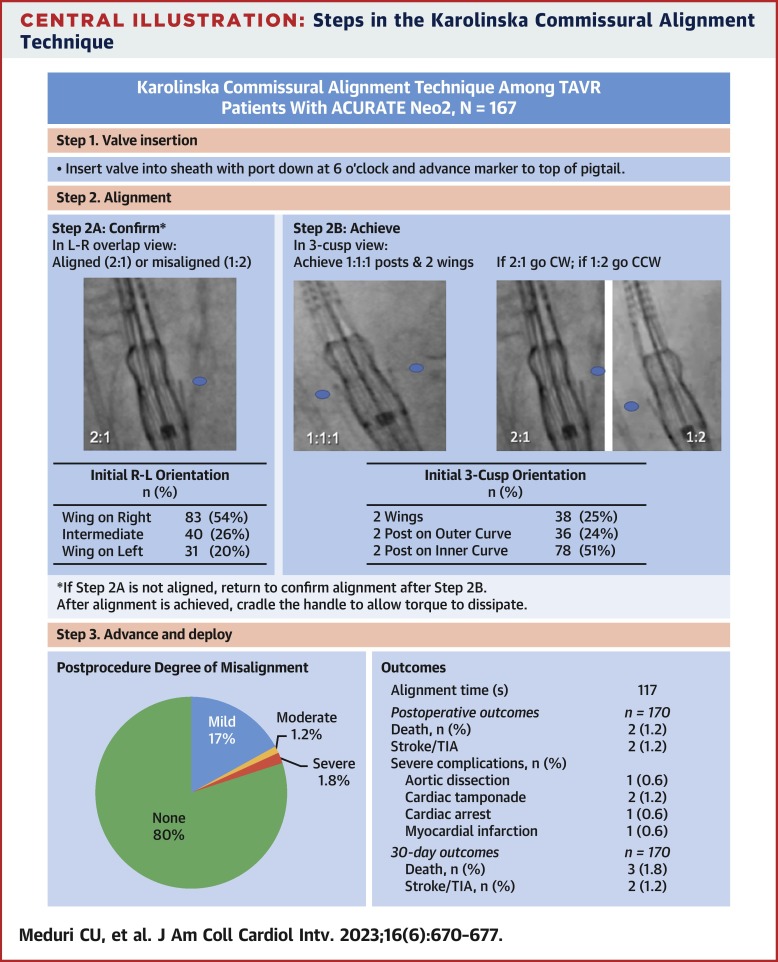
Commissural Alignment With ACURATE neo2 Valve in an Unselected Population
Source : https://www.sciencedirect.com/science/article/abs/pii/S1936879823000195?via=ihub
Commissural alignment has become an important topic in transcatheter aortic valve replacement (TAVR) because it may improve coronary access, facilitate future valve procedures, and possibly improve valve durability. The efficacy...
Conclusions: In this large evaluation of a commissural alignment technique, alignment was achieved in nearly all patients without safety concerns or impact to procedure duration. Commissural alignment appears effective and safe across all patients with this novel technique.
Impact of the COVID-19 pandemic on aortic valve replacement procedures in Germany - BMC Cardiovascular Disorders
Source : https://bmccardiovascdisord.biomedcentral.com/articles/10.1186/s12872-023-03213-y
Background COVID-19 has caused the deferral of millions of elective procedures, likely resulting in a backlog of cases. We estimate the number of postponed surgical aortic valve replacement (sAVR) and...
Conclusion: The first year of the COVID-19 pandemic saw a substantial postponing of AVR procedures in Germany. Postponing was higher for sAVR than for TAVR procedures and less pronounced during the second wave of the COVID-19 pandemic.

Comparison of Periprocedural and Intermediate-Term Outcomes of TAVI in Patients with Ejection Fraction ≤ 20% vs. Patients with 20% - PubMed
Source : https://pubmed.ncbi.nlm.nih.gov/36983390/
Treatment of congestive heart failure (CHF) with left ventricular (LV) systolic dysfunction and severe aortic stenosis (AS) is challenging, yet transcatheter aortic valve replacement (TAVR) has emerged as a suitable...
Conclusions/Relevance: Our study suggests that patients with EF ≤ 20% can safely have TAVR with similar periprocedural outcomes compared to patients with EF > 20% to ≤40% despite higher rates of vasopressor and mechanical support.
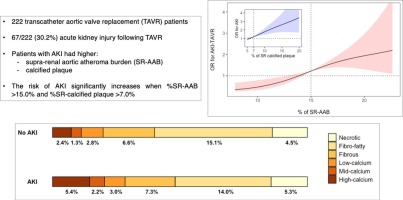
Supra-renal aortic atheroma extent and composition predict acute kidney injury after transcatheter aortic valve replacement: A three-dimensional computed tomography study
Source : https://www.internationaljournalofcardiology.com/article/S0167-5273(23)00464-3/fulltext
Acute kidney injury (AKI) may complicate transcatheter aortic valve replacement (TAVR) and could be linked to atheroembolization associated with catheter manipulation in the supra-renal (SR) aorta.We sought to determine the...
Conclusions: Suprarenal aortic atheroma, when highly calcified, is associated with AKI-TAVR. Perioperative-MSCT assessment of aortic atherosclerosis may help in identification of patients at high-risk for AKI-TAVR, who could benefit from higher peri-operative surveillance.