



Cerebral Ischemic Lesions after Transcatheter Aortic Valve Implantation in Patients with Non-Calcific Aortic Stenosis - PubMed
Source : https://pubmed.ncbi.nlm.nih.gov/36362730/
Evidence for transcatheter aortic valve implantation (TAVI) is scarce among patients with non-calcific aortic stenosis, and it is not known whether aortic valve calcification is associated with new cerebral ischemic...
Conclusion: Non-calcific AS patients had a lower risk of developing new cerebral ischemic infarction after TAVI compared to calcific AS patients. However, new ischemic lesions were still found in over 70% of patients.

Unmet Needs in TAVR: Conduction Disturbances and Management of Coronary Artery Disease - PubMed
Source : https://pubmed.ncbi.nlm.nih.gov/36362484/
Over the past two decades, transcatheter aortic valve replacement (TAVR) swiftly evolved from a disrupting technology towards mainstream therapy in the field of severe symptomatic aortic stenosis. A series of...
Relevance: In the present review, we will discuss the incidence, prognostic impact, and unmet needs of patients with post-TAVR new-onset conduction disturbances and the ongoing challenges posed by the management of concomitant coronary artery disease.

Effect of Native Aortic Leaflet Geometry Modification on Transcatheter Aortic Valve Neo-sinus and Aortic Sinus Flow: An In-vitro Study - Cardiovascular Engineering and Technology
Source : https://link.springer.com/article/10.1007/s13239-022-00647-x
Purpose Leaflet thrombosis is a potentially fatal complication after transcatheter aortic valve replacement (TAVR). Blood flow stagnation in the neo-sinus and aortic sinuses are associated with increased thrombus severity. Native...
Relevance: We evaluate the effect of aortic leaflet modification on the neo-sinus and aortic sinus flow stagnation after simulated TAVR.
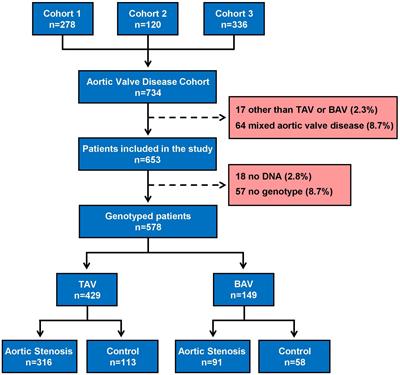
IL6 gene polymorphism association with calcific aortic valve stenosis and influence on serum levels of interleukin-6
Source : https://www.frontiersin.org/articles/10.3389/fcvm.2022.989539/full
Aortic valve stenosis is the most frequent valve disease in developed countries and its prevalence will increase with population aging. There is still no pharmaceutical treatment nor biomarker to determine...
Conclusions/Relevance: Our results agree with the identification of IL6 as a locus risk for stenosis and also with the intervention of this cytokine in aortic valve calcification. A more exhaustive follow-up of those patients carrying risk genotypes is therefore recommended.
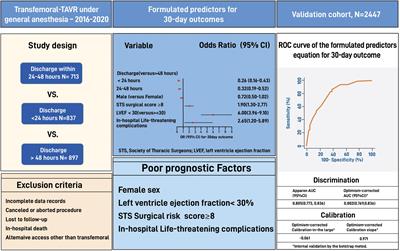
The safety of early discharge following transfemoral transcatheter aortic valve replacement under general anesthesia
Source : https://www.frontiersin.org/articles/10.3389/fcvm.2022.1022018/full
BackgroundThere is growing evidence of the safety of same-day discharge for low-risk conscious sedated TAVR patients. However, the evidence supporting the safety of early discharge following GA-TAVR with routine transesophageal...
Conclusion: Discharge within 24 h following GA-TAVR using TEE is safe for selected patients using our proposed validated predictors.