



Aortic Stenosis Connect
  • Saved
Bail out lithotripsy to treat delayed valve-in-valve TAVR-related coronary obstruction - PubMed

Bail out lithotripsy to treat delayed valve-in-valve TAVR-related coronary obstruction - PubMed

Source : https://pubmed.ncbi.nlm.nih.gov/36385465/

Coronary access difficulty and stent compression by the juxtaposed aortic valve leaflet hamper percutaneous management of delayed coronary artery obstruction (CAO) after valve-in-valve (Edwards Sapien 3 in St. Jude Trifecta)...


Relevance: Here, we present a case of delayed post-TAVR CAO treated with intravascular lithotripsy and multistenting to overcome stent compression by the adjacent calcified leaflet.

  • Saved
Successful emergency transcatheter aortic valve replacement in the setting of hemodynamically unstable prosthetic aortic valve stenosis

Successful emergency transcatheter aortic valve replacement in the setting of hemodynamically unstable prosthetic aortic valve stenosis

Source : https://jcvtr.tbzmed.ac.ir/Article/jcvtr-30320

FDA approved transcatheter aortic valve replacement (TAVR) for the treatment of symptomatic aortic valve (AV) stenosis. Recent evidence reveals that TAVR is the treatment of choice in most patients with...


Conclusions/Relevance: We are reporting a unique case of successful emergency TAVR in a hemodynamically unstable patient, who had severe symptomatic bio-prosthetic AV stenosis at the time of presentation.

  • Saved
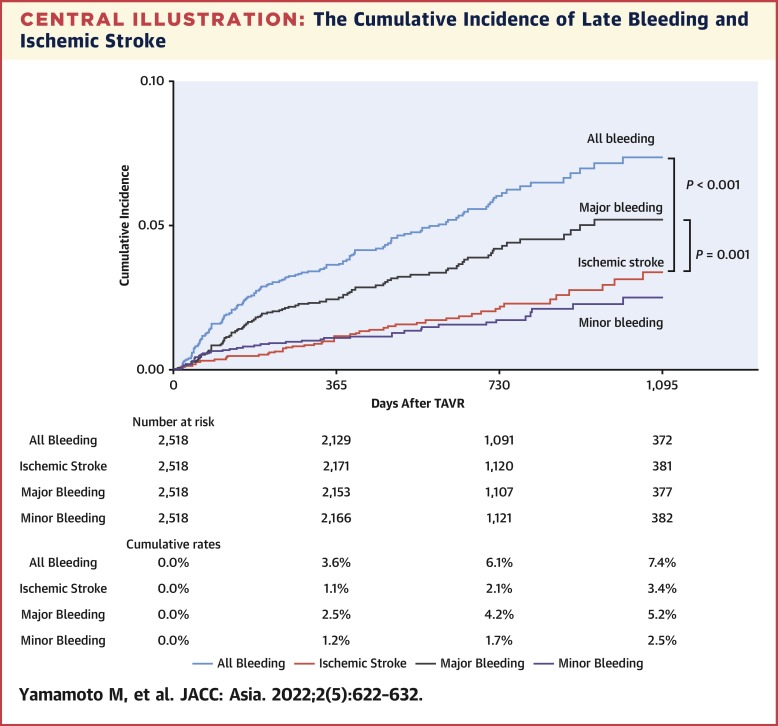
Incidence, Timing, and Causes of Late Bleeding After TAVR in an Asian Cohort

Incidence, Timing, and Causes of Late Bleeding After TAVR in an Asian Cohort

Source : https://www.sciencedirect.com/science/article/pii/S2772374722001247?via=ihub

Data regarding the incidence, predictive factors, and clinical outcomes of post-transcatheter aortic valve replacement (TAVR) bleeding is limited in the Asian cohort. This study sought to assess the predictors and...


Conclusions: Late bleeding after TAVR was not a rare complication, and it significantly increased long-term mortality. It should be carefully managed, especially when it is predictable in the high-risk cohort, and efforts should be taken to reduce bleeding complications even after a successful procedure.

  • Saved

made a Post

73 y.o. with low-flow, low-gradient severe aortic stenosis

A 73-year-old man with history of hypertension presents with New York Heart Association Class III symptoms of exertional dyspnea and fatigue. Auscultation demonstrates a crescendo-decrescendo, midsystolic ejection murmur. Results of a previous echo showed no valvular heart disease.

Echo readings were as follows:

  • aortic valve area < 1 cm2
  • jet velocity = 3.5 m/s
  • mean transvalvular gradient = 33mm Hg
  • LVEF < 50%

How do you determine whether the patient has severe or pseudo-severe aortic stenosis?

How does the team proceed if there is discordance between the hemodynamics and the aortic valve area?

  • 3yr
    Agree with above posts, AVA indicates the severity. A DSE Will confirm this as will a cardiac cath. Moreover if there are symptoms of angina and syncope , the above will Show More
  • 3yr
    there is enough evidence of significant aortic stenosis with symptoms and data provided at this time. Therefore I would recommend cardiac cath and coronary angiography which he Show More

Show More Comments

  • Saved
A Meta-Analysis on the Impact of High BMI in Patients Undergoing Transcatheter Aortic Valve Replacement - PubMed

A Meta-Analysis on the Impact of High BMI in Patients Undergoing Transcatheter Aortic Valve Replacement - PubMed

Source : https://pubmed.ncbi.nlm.nih.gov/36354785/

doi: 10.3390/jcdd9110386. 1 Department of Internal Medicine, Jacobi Medical Center/Albert Einstein College of Medicine, The Bronx, NY 10461, USA. 2 AdventHealth Orlando, Orlando, FL 32803, USA. 3 Department of Cardiology,...


Conclusion: Individuals with overweight and obesity were associated with lower mortality risk compared to those with normal BMI but with higher likelihood of major vascular complications and permanent pacemaker implantation after TAVR.