



Temporal Trends in Internal vs. External Referrals for TAVR in a Large Academic Center: Patients Characteristics and Outcomes
Source : https://www.hindawi.com/journals/jitc/2022/6074368/
Background . Since transcatheter aortic valve replacement (TAVR) first became approved for inoperable patients followed by high, intermediate-, and low-risk patients, referrals to TAVR centers have rapidly increased. The purpose...
Conclusions: This study presents the referral pattern to a large TAVR center in North Carolina. Over time, there was an increase in external referrals suggesting that TAVR is increasingly adopted as an important component of the management of aortic valve stenosis. Internally and externally referred patients have differences in baseline...

The application of 3D printing in preoperative planning for transcatheter aortic valve replacement: a systematic review - BioMedical Engineering OnLine
Source : https://biomedical-engineering-online.biomedcentral.com/articles/10.1186/s12938-022-01029-z
Background Recently, transcatheter aortic valve replacement (TAVR) has been suggested as a less invasive treatment compared to surgical aortic valve replacement, for patients with severe aortic stenosis. Despite the attention,...
Conclusions: Patient-specific 3D models can be used in pre-procedural planning for challenging cases, to help deliver personalised treatment. However, the application of 3D printing is not recommended for routine clinical practice, due to practicality issues.

Staged versus concomitant transcatheter aortic valve replacement and percutaneous coronary intervention: A national analysis
Source : https://www.ncbi.nlm.nih.gov/pmc/articles/PMC9390561/
Zachary Tran, MD, a Joseph Hadaya, MD, a Peter Downey, MD, b Yas Sanaiha, MD, a Arjun Verma, a Richard J. Shemin, MD, a and Peyman Benharash, MD a, ∗...
Conclusions: Concomitant PCI/TAVR was associated with similar rates of in-hospital mortality but reduced rates of acute kidney injury and lower resource utilization. While evaluating patient-specific factors, concomitant PCI/TAVR might be reasonable in select individuals.
From the Evolut Pro to the Evolut FX self-expanding transcatheter aortic valve replacement systems: current status and future perspectives
Source : https://www.tandfonline.com/doi/abs/10.1080/17434440.2022.2113386?journalCode=ierd20
ABSTRACT Since the initial experience with the CoreValve (Medtronic, Minneapolis, Minnesota), there have been continuous iterations of this valve system in order to improve procedural success and reduce periprocedural complications....
Expert Opinion: The Evolut Pro system has been associated with good clinical outcomes and excellent valve hemodynamic performance including reduced rates of paravalvular leaks. Technical enhancements to improve valve positioning, orientation, and vascular access have been implemented in the newer generation Evolut FX system.
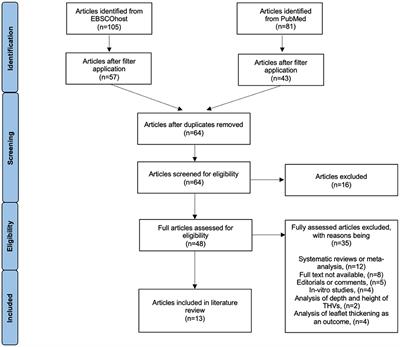
Commissural alignment in transcatheter aortic valve replacement: A literature review
Source : https://www.frontiersin.org/articles/10.3389/fcvm.2022.938653/full
IntroductionTranscatheter aortic valve replacement (TAVR) is a minimally invasive procedure to replace a diseased and faulty aortic valve in patients with severe aortic stenosis. As TAVR gains popularity among lower-risk...
Conclusions: An increase in optimal commissural alignment via introduction of an alignment technique may seem attractive; however; the categorization of commissural alignment is arbitrary and does not accurately reflect real life clinical implications. Further research is needed to determine whether a routine procedure to achieve commissural...