


Comparison of outcomes of trans-subclavian versus trans-apical approaches in transcatheter aortic valve implantation - Journal of Cardiothoracic Surgery
Source : https://cardiothoracicsurgery.biomedcentral.com/articles/10.1186/s13019-022-01929-0
Background Many patients are unsuitable for conventional femoral transcatheter aortic valve implantation (TAVI) but there is limited evidence as to which alternative approach has the best outcomes. We compared clinical...
Conclusions: Both trans-subclavian and trans-apical access are viable approaches for patients requiring non-transfemoral TAVI. Differences in peri-procedural indices reflect the disparate patient populations and factors governing prosthesis choice, and short- and long-term mortality was similar.
Surgical aortic valve replacement provides better left ventricular mass regression than transcatheter aortic valve replacement in patients with small aortic annulus - General Thoracic and Cardiovascular Surgery
Source : https://link.springer.com/article/10.1007/s11748-022-01858-8
Objectives This study aimed to evaluate the incidence of patient-prosthesis mismatch (PPM) and degree of left ventricular (LV) mass regression after surgical aortic valve replacement (SAVR) and transcatheter aortic valve...
Conclusions: SAVR provides better LV mass regression than TAVR with a comparable rate of PPM in patients with small aortic annulus.

Direct oral anticoagulants or vitamin K antagonists after TAVR: A systematic review and meta-analysis
Source : https://www.internationaljournalofcardiology.com/article/S0167-5273(22)01109-3/fulltext
Several patients undergoing transcatheter aortic valve replacement (TAVR) also require oral anticoagulation (OAC) for atrial fibrillation (AF) or deep vein thromboembolism. However, the optimal type of OAC strategy (direct oral...
Conclusion: Considering the totality of available evidence, in patients underwent TAVR with a concomitant indication for OAC, DOACs-based strategy is an effective and safe anticoagulation strategy compared to VKA.
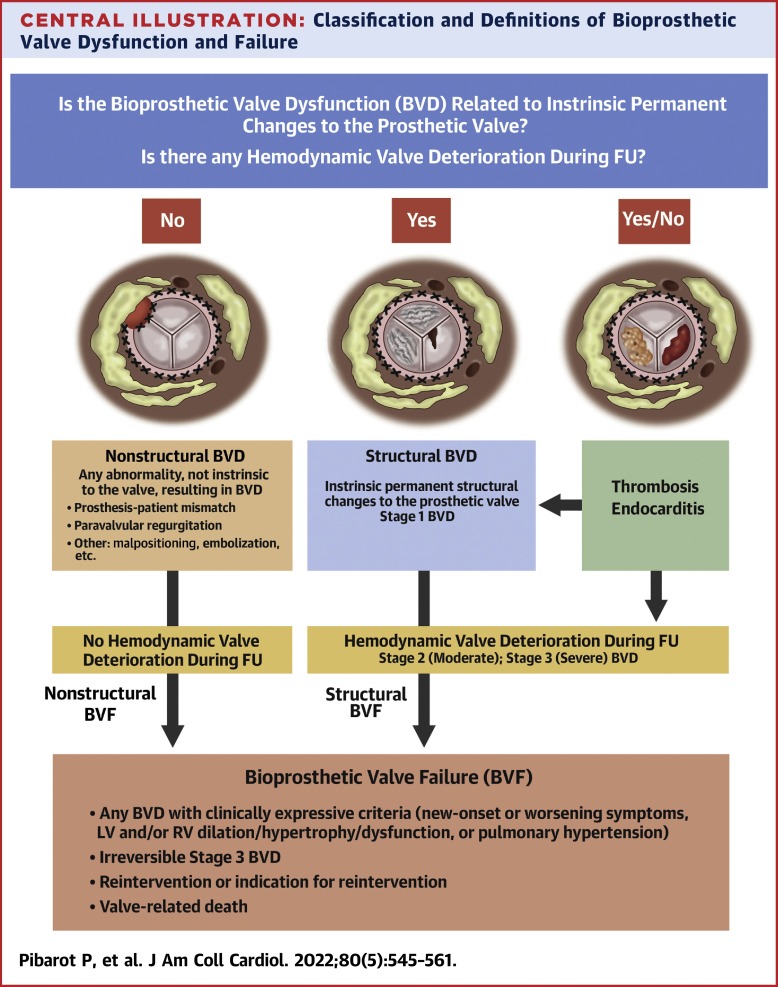
Standardized Definitions for Bioprosthetic Valve Dysfunction Following Aortic or Mitral Valve Replacement: JACC State-of-the-Art Review
Source : https://www.sciencedirect.com/science/article/pii/S0735109722051622?via=ihub
Both surgical and transcatheter aortic and mitral bioprosthetic valves have limited durability and are prone to structural valve deterioration. * Consideration only of valve-related reintervention or death underestimates the incidence...
Relevance: The main objective of this expert consensus document is to propose or complement standardized definitions and measurement methods of: nonstructural and structural BVD and BVF following aortic or mitral biological valve replacement. These definitions should support standardized reporting in research and help guide clinical practice.

Conclusion: MCOT for ambulatory cardiac monitoring post-TAVR discharge is associated with higher rates of pacemaker insertion, at no overall greater costs.