
Heart Failure Connect
  • Saved
Updated guideline for heart failure

The 2022 AHA/ACC/HFSA Guideline for the Management of Heart Failure has been updated with new recommendations based on recent data.

Key updates

For heart failure with reduced ejection fraction (HFrEF), the guideline-directed medical therapy (GDMT) comprises 4 classes of medications (GDMT-4).

  1. renin-angiotensin system inhibition with the following:
  • angiotensin receptor-neprilysin inhibitors (ARNis);
  • angiotensin-converting enzyme inhibitors (ACEis);
  • angiotensin (II) receptor blockers (ARBs) alone;
  1. beta blockers;
  2. mineralocorticoid receptor antagonists (MRAs);
  3. the newly added group, SGLT2 inhibitors (SGLT2is).


For heart failure with mildly reduced LVEF, new medication recommendations include the utilization of SGLT2is. Importantly, SGLT2is have a Class of Recommendation (COR) 2a in HF with mildly reduced EF (HFmrEF), with weaker recommendations (i.e., COR 2b) issued for ARNi, ACEi, ARB, MRA and beta blockers.

For patients with HF with preserved EF (HFpEF), new drug recommendations include the utilization of SGLT2is (i.e., COR 2a); MRAs (i.e., COR 2b); and ARNis (i.e., COR 2b). Of note, a COR 1 is considered “strong,” with benefit >>> risk; COR 2a, “moderate,” with benefit >> risk; and COR 2b, “weak” with benefit > risk.

What role do SGLT2is play in your management of HF and does your use align with the 2022 heart-failure guideline? Which patients are particularly responsive to this class of medications?

  • 3yr
    Yes. I use SGLT2 inhibitors for heart failure associated risk reduction especially with patients with diabetes and/or patients at risk for kidney disease progression. Benefits include prevention of cardiovascular Show More
  • 3yr
    I would recommend the use of SGLT2 esp. in diabetics not only does it lower BP, some weight loss, CV and renal benefits as well

Show More Comments

  • Saved
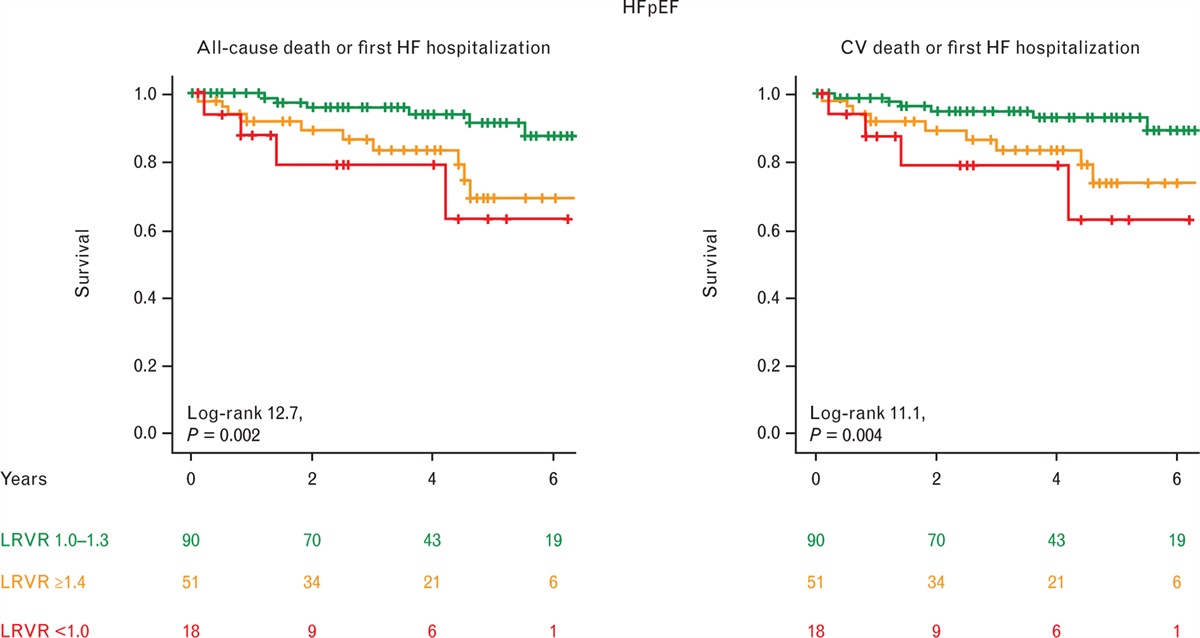
Left-to-right ventricular volume ratio and outcome in heart failure with preserved ejection fraction

Left-to-right ventricular volume ratio and outcome in heart failure with preserved ejection fraction

Source : https://journals.lww.com/jcardiovascularmedicine/Abstract/2023/08000/Left_to_right_ventricular_volume_ratio_and_outcome.10.aspx

xamined all HFpEF outpatients undergoing a cardiac magnetic resonance from 2011 to 2021. The left-to-right ventricular volume ratio (LRVR) was defined as the ratio between the LV and right ventricle...

Conclusion: LRVR values less than 1.0 or at least 1.4 are associated with worse outcomes in HFpEF. LRVR may become a valuable tool for risk prediction in HFpEF.

  • Saved
Glucagon-like peptide-1 receptor agonists across the spectrum of heart failure - PubMed

Glucagon-like peptide-1 receptor agonists across the spectrum of heart failure - PubMed

Source : https://pubmed.ncbi.nlm.nih.gov/37409733/

Glucagon-like peptide-1 receptor agonists (GLP-1 RA) have been used to reduce body weight in overweight or people with obesity and to improve glycemic control and cardiovascular outcomes among people with...

Relevance: In this review, we summarize the evidence for the use of GLP-1 RA across patient’s risk with a particular focus in HF.

  • Saved
Clinical and Echocardiographic Correlates of Iron Status in Chronic Heart Failure Patients: A Cross-Sectional Descriptive Study

Clinical and Echocardiographic Correlates of Iron Status in Chronic Heart Failure Patients: A Cross-Sectional Descriptive Study

Source : https://www.ncbi.nlm.nih.gov/pmc/articles/PMC10321567/

Background: Chronic heart failure (HF) is one of the conditions commonly seen in the medical outpatient departments, and iron deficiency (ID) has been reported as the commonest nutritional deficiency in...

Conclusion: A spectrum of clinical changes occurs in patients with chronic HF. ID can make these changes more profound and the condition less amenable to standard HF treatments. These patients may therefore benefit from further evaluation for this nutritional deficiency. Laboratory measurements including Tsat and serum ferritin may help in...

  • Saved

Conclusions: The results confirmed that aerobic exercise and concurrent training interventions were effective to improve inflammaging markers of TNF-α, IL-6, and hs-CRP. These exercise-related anti-inflammaging responses were observed across ages (middle-aged and elderly-aged), exercise intensities, duration of follow-ups, and mean LVEFs...