



Effect of CSL112 on Recurrent Myocardial Infarction and Cardiovascular Death: Insights from the AEGIS-II Trial - PubMed
Source : https://pubmed.ncbi.nlm.nih.gov/38588930/
While CSL112 did not significantly reduce the occurrence of the primary study endpoints, patients treated with CSL112 infusions had numerically lower rates of CV death and MI, type-1 MI, and...
Compared with placebo, patients treated with CSL112 infusions had numerically lower rates of CV death and MI, type 1 MI, and stent thrombosis-related MI.
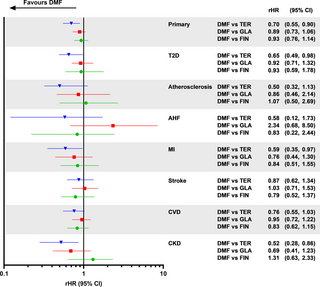
Incidence of Type 2 Diabetes, Cardiovascular Disease and Chronic Kidney Disease in Patients With Multiple Sclerosis Initiating Disease-Modifying Therapies: Retrospective Cohort Study Using a Frequentist Model Averaging Statistical Framework
Source : https://journals.plos.org/plosone/article?id=10.1371/journal.pone.0300708
Researchers are increasingly using insights derived from large-scale, electronic healthcare data to inform drug development and provide human validation of novel treatment pathways and aid in drug repurposing/repositioning. The objective...
A trend was observed among patients treated with dimethyl fumarate toward a decreased incidence of type 2 diabetes, CVD, and CKD relative to other disease-modifying therapies.

The Brain-Heart Axis: Integrative Analysis of the Shared Genetic Etiology Between Neuropsychiatric Disorders and Cardiovascular Disease
Source : https://pubmed.ncbi.nlm.nih.gov/38518856/
Extensive genetic correlations and genetic overlaps between neuropsychiatric disorders and CVD were identified in this study, which might provide some new insights into the brain-heart axis and the therapeutic targets...
Bidirectional Mendelian randomization analysis showed extensive significant causal relationships between neuropsychiatric disorders and CVD.

Associations of Urinary Volatile Organic Compounds With Cardiovascular Disease Among the General Adult Population
Source : https://pubmed.ncbi.nlm.nih.gov/38523395/
This study was to estimate the associations of volatile organic compounds (VOCs) exposure with the prevalence of total and specific cardiovascular disease (CVD) among the general adult population. This cross-sectional...
Exposure to volatile organic compounds increases CVD prevalence and advances the identification of risk factors for CVD for environmental study.

Multimorbidity in Atherosclerotic Cardiovascular Disease and Its Associations With Adverse Cardiovascular Events and Healthcare Costs: a Real-World Evidence Study
By Dingwei Dai, Joaquim Fernandes & 4 more. We assessed the multimorbidity burden and its associations with adverse cardiovascular events and healthcare costs among patients with atherosclerotic cardiovascular disease.
The multimorbidity burden tended to increase in older age groups and was comparatively higher in women and in those with higher social vulnerability.