


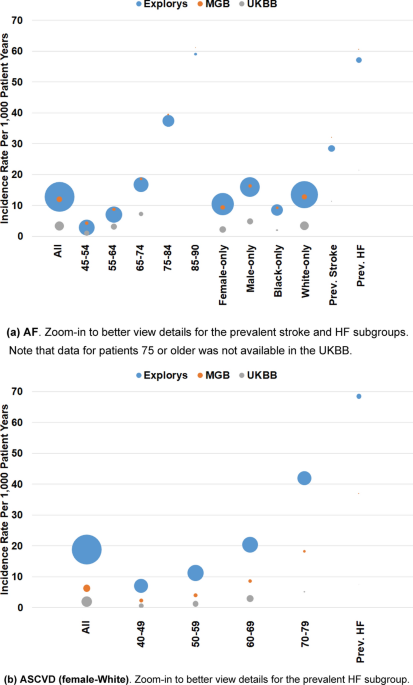
Prediction performance and fairness heterogeneity in cardiovascular risk models - Scientific Reports
Source : https://www.nature.com/articles/s41598-022-16615-3
Prediction models are commonly used to estimate risk for cardiovascular diseases, to inform diagnosis and management. However, performance may vary substantially across relevant subgroups of the population. Here we investigated...
Conclusion/Relevance: Our findings highlight the need to characterize and quantify the behavior of clinical risk models within specific subpopulations so they can be used appropriately to facilitate more accurate, consistent, and equitable assessment of disease risk.
The associations between TMAO-related metabolites and blood lipids and the potential impact of rosuvastatin therapy - Lipids in Health and Disease
Source : https://lipidworld.biomedcentral.com/articles/10.1186/s12944-022-01673-3
Background Trimethylamine N-oxide (TMAO)-related metabolites are associated with the pathogenesis of atherosclerotic cardiovascular disease (ASCVD) and are known to disrupt lipid metabolism. The aims of this study were to evaluate...
Relevance: The evidence about the association of the essential trace element (ETE) mixture with atherosclerotic cardiovascular disease (ASCVD) amongst older adults is limited. This study aims to evaluate the associations of single ETEs and the ETE mixture with the 10-year ASCVD risks and its predicting factors in Chinese community-dwelling...

The association between essential trace element mixture and atherosclerotic cardiovascular disease risk among Chinese community-dwelling older adults - Environmental Science and Pollution Research
Source : https://link.springer.com/article/10.1007/s11356-022-22066-0
The evidence about the association of the essential trace element (ETE) mixture with atherosclerotic cardiovascular disease (ASCVD) amongst older adults is limited. This study aims to evaluate the associations of...
Relevance: The evidence about the association of the essential trace element (ETE) mixture with atherosclerotic cardiovascular disease (ASCVD) amongst older adults is limited. This study aims to evaluate the associations of single ETEs and the ETE mixture with the 10-year ASCVD risks and its predicting factors in Chinese community-dwelling...
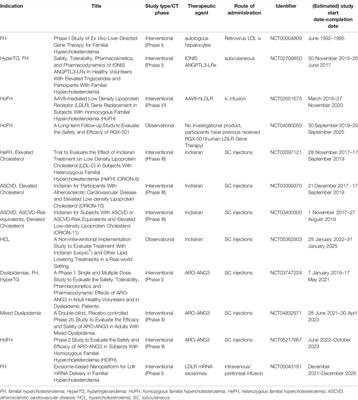
The Progression of Treatment for Refractory Hypercholesterolemia: Focus on the Prospect of Gene Therapy
Source : https://www.frontiersin.org/articles/10.3389/fgene.2022.911429/full
Refractory hypercholesterolemia (RH), including homozygous familial hypercholesterolemia (HoFH) and compound heterozygous familial hypercholesterolemia, is characterized by high levels of low-density lipoprotein cholesterol (LDL-C) despite existing cholesterol-lowering methods at maximal tolerable...
Relevance: Currently, new cholesterol-lowering strategies are on the market, not only at the protein level [i.e., bempedoic acid (inhibiting ATP-citrate lyase), alirocumab and evolocumab (monoclonal antibodies against PCSK9), evinacumab (monoclonal antibody against ANGPTL3)] but also at the transcript level [i.e., mipomersen (antisense...

Inhibition of ATP-citrate lyase improves NASH, liver fibrosis, and dyslipidemia - PubMed
Source : https://pubmed.ncbi.nlm.nih.gov/35675800/
1 Centre for Metabolism, Obesity and Diabetes Research, McMaster University, Hamilton, ON L8S 4L8, Canada; Division of Endocrinology and Metabolism, Department of Medicine, McMaster University, Hamilton, ON L8S 4L8, Canada....
Relevance: Elevated liver de novo lipogenesis contributes to non-alcoholic steatohepatitis (NASH) and can be inhibited by targeting acetyl-CoA carboxylase (ACC). However, hypertriglyceridemia limits the use of pharmacological ACC inhibitors as a monotherapy. ATP-citrate lyase (ACLY) generates acetyl-CoA and oxaloacetate from citrate, but...