


Transcatheter versus Surgical Aortic Valve Replacement Outcomes among Solid Organ Transplant Patients: A Systematic Review and Meta-Analysis
Source : https://www.sciencedirect.com/science/article/abs/pii/S0146280623001020?via=ihub
Available online 15 March 2023, 101685 Author links open overlay panel 1 , , , , , , , , , 9 Show more The safety and clinical outcomes of...
Conclusion: In solid organ transplant patients, TAVR appeared to be a safe procedure with fewer post-procedure complications, shorter length of hospital stay, and lower in hospital mortality compared with SAVR.

Impact of Intraprocedural Pressure Changes on Hemodynamic Outcome During Self-Expanding TAVR - Cardiology and Therapy
Source : https://link.springer.com/article/10.1007/s40119-023-00307-8
Introduction During the transcatheter aortic valve replacement (TAVR) procedure, hemodynamic measurements can be used to evaluate transcatheter heart valve (THV) performance. We hypothesized that the occurrence of a significant decrease...
Conclusion: A decrease in aortic pressure after annular contact is associated with an increased probability of good hemodynamic outcome after self-expanding TAVR implantation. In addition to other methods, this parameter could be used as an additional marker for optimal valve positioning and hemodynamic outcome during the implantation...
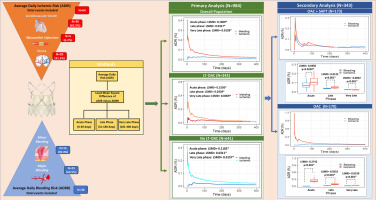
Time course of ischemic and bleeding burden in consecutive patients undergoing transcatheter aortic valve replacement (FOCUS-ONE registry)
Source : https://www.internationaljournalofcardiology.com/article/S0167-5273(23)00336-4/fulltext
Ischemic or bleeding events might occur after transcatheter aortic valve replacement (TAVR), with the potential to hamper clinical outcomes. This study aimed to characterize the average daily ischemic risks (ADIRs)...
Conclusions: In patients undergoing TAVR Average daily risk fluctuates over time. However, ADIRs overcome ADBRs in all timeframes, especially in the acute phase and regardless of antithrombotic strategy adopted.
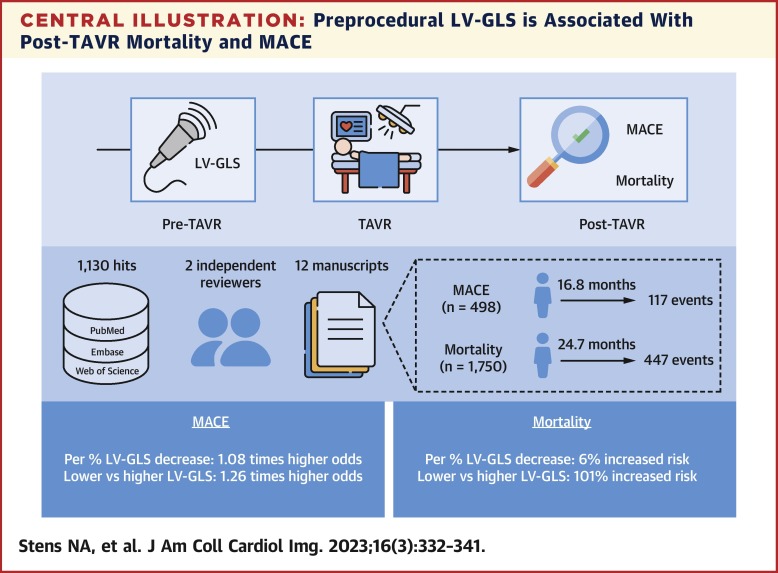
Prognostic Value of Preprocedural LV Global Longitudinal Strain for Post-TAVR-Related Morbidity and Mortality: A Meta-Analysis
Source : https://www.sciencedirect.com/science/article/abs/pii/S1936878X23000360?via=ihub
Left ventricular ejection fraction (LVEF) demonstrates limited prognostic value for post-transcatheter aortic valve replacement (TAVR) outcomes. Evidence regarding the potential role of left ventricular global longitudinal strain (LV-GLS) in this...
Conclusions: Preprocedural LV-GLS was significantly associated with post-TAVR morbidity and mortality. This suggests a potential clinically important role of pre-TAVR evaluation of LV-GLS for risk stratification of patients with severe aortic stenosis.

Quality of Life after Transcatheter Aortic Valve Replacement in Sarcopenic Patients Using the Toronto Aortic Stenosis Quality of Life Questionnaire - PubMed
Source : https://pubmed.ncbi.nlm.nih.gov/36902864/
The TASQ questionnaire revealed changes in QoL after TAVR, regardless of patients' sarcopenic status. Health status improved substantially in both sarcopenic and non-sarcopenic patients following TAVR. Lack of improvement in...
Conclusions: The TASQ questionnaire revealed changes in QoL after TAVR, regardless of patients' sarcopenic status. Health status improved substantially in both sarcopenic and non-sarcopenic patients following TAVR. Lack of improvement in health expectations seems to depend on patients' expectations regarding the procedure and specific aspects...