



Utility of Cerebral Embolic Protection Devices in Transcatheter Procedures: A Systematic Review and Meta-Analysis
Source : https://www.sciencedirect.com/science/article/abs/pii/S0146280623000920?via=ihub
Available online 3 March 2023, 101675 Author links open overlay panel Zulfiqar Qutrio Baloch MD 1 , , Hasan Fareed Siddiqui 3 , Fahd Niaz Shaikh 3 , , ,...
Conclusions: The results suggest that CEP device use was associated with a lower risk of disabling stroke and bleeding events in patients undergoing TAVR.
-
Aortic Stenosis Connect3yrKey Points • Source: Current Problems in Cardiology • Conclusions: “The results suggest that CEP [cerebral embolic protection] device use was associated with a lower risk of disabling stroke and bleeding events in patients Show More

Energy loss index as a predictor of all-cause mortality after transcatheter aortic valve replacement: A long-term follow-up - PubMed
Source : https://pubmed.ncbi.nlm.nih.gov/36859692/
ELI is an additional prognostic factor that should be considered during risk assessment before TAVR. This study shows that patients with Low ELI had decreased cumulative survival post-TAVR. These patients...
Conclusion: ELI is an additional prognostic factor that should be considered during risk assessment before TAVR. This study shows that patients with Low ELI had decreased cumulative survival post-TAVR. These patients almost had a fivefold increased risk of death following TAVR.
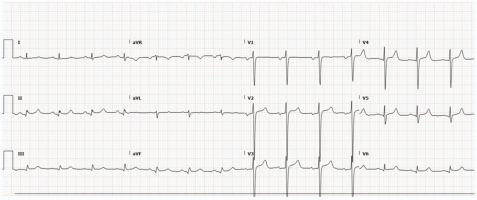
A Rare Case of Radiation-Associated Aortic and Mitral Valve Stenosis Treated With Transcatheter Valve Replacements
Source : https://www.sciencedirect.com/science/article/pii/S2666084922007938?via=ihub
Radiation therapy is the standard of care for achieving cure for many thoracic malignancies, but it can result in long-term cardiovascular sequelae su...
Relevance: To describe a rarely documented case of severe aortic and mitral stenosis due to prior radiation therapy for giant cell tumor with the hallmark imaging feature of calcification of the aortomitral curtain.
Microcirculatory tissue oxygenation correlates with kidney function after transcatheter aortic valve implantation-Results from a prospective observational study
Source : https://www.frontiersin.org/articles/10.3389/fcvm.2023.1108256/full
IntroductionKidney dysfunction is common in patients with aortic stenosis (AS) and correction of the aortic valve by transcatheter aortic valve implantation (TAVI) often affects kidney function. This may be due...
Conclusion: HSI is a promising technique for periinterventional monitoring of tissue oxygenation and microcirculatory perfusion quality, which are related to kidney function, physical capacity, and clinical outcomes after TAVI.

Comparing Vitamin K Antagonists and Direct Oral Anticoagulants in Patients With Atrial Fibrillation Undergoing Transcatheter Aortic Valve Replacement: A Meta-Analysis - PubMed
Source : https://pubmed.ncbi.nlm.nih.gov/36815218/
Aortic stenosis (AS) is the most prevalent valvular disease in the elderly population and the prevalence of atrial fibrillation (AF) increases in the elderly population. Transcatheter aortic valve replacement (TAVR)...
Conclusions/Relevance: This study showed that compared to VKA, DOACs were associated with lower risks of major bleeding and ICH, and comparable risks of all-cause mortality, ischemic stroke, and thromboembolism in patients with AF (almost 100% AF) undergoing TAVR, despite higher CHA2DS2-VASc score in the DOAC group.