


Syncope in Patients with Severe Aortic Stenosis Undergoing Transcatheter Aortic Valve Replacement
Source : https://www.onlinecjc.ca/article/S0828-282X(23)00137-X/fulltext
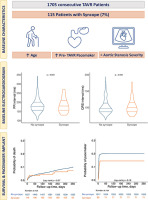
No data exist on the clinical and prognostic significance of syncope in patients undergoing transcatheter aortic valve replacement (TAVR) for severe aortic stenosis. A total of 1705 consecutive patients with...
Conclusions: Syncope was not associated with a more advanced valvular disease and had no significant prognostic impact in patients undergoing TAVR. However, arrhythmias and conduction system disturbances were more common in patients with previous syncope and might play a relevant role in the pathogenesis of syncope in aortic stenosis patients.
Cardiac Damage and Quality of Life After Aortic Valve Replacement in the PARTNER Trials
Source : https://www.sciencedirect.com/science/article/abs/pii/S073510972207718X?via=ihub
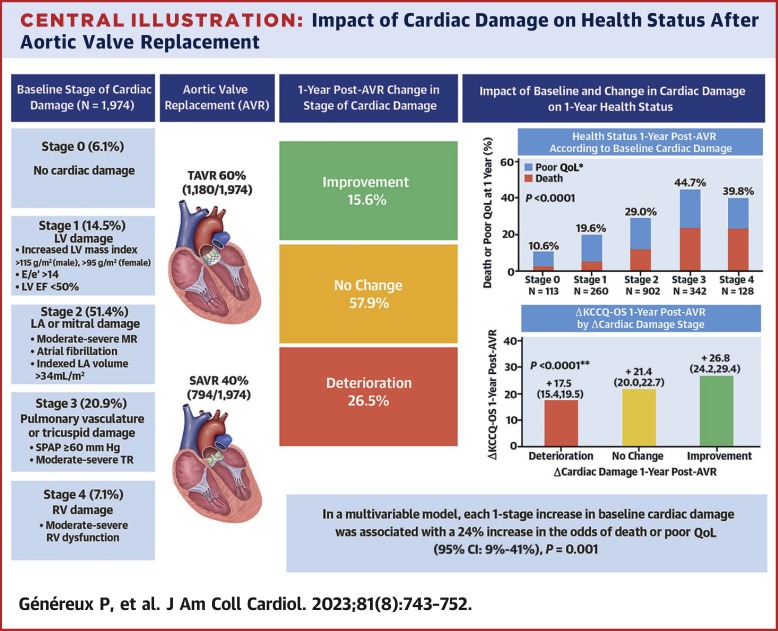
The extent of extravalvular cardiac damage is associated with increased risk of adverse events among patients with severe aortic stenosis undergoing aortic valve replacement (AVR). The goal was to describe...
Conclusions: The extent of cardiac damage before AVR has an important impact on health status outcomes, both cross-sectionally and after.

Aortic Stenosis and Aortic Valve Replacement Among Patients with Chronic Kidney Disease: A Narrative Review - PubMed
Source : https://pubmed.ncbi.nlm.nih.gov/36812906/
Special consideration must be taken in patients with both CKD and AS. The choice of whether to undergo hemodialysis (HD) vs. peritoneal dialysis (PD) among patients with CKD is multifactorial...
Conclusions/Relevance: TAVR has been associated with decreased complications among CKD patients, but the decision is multifactorial and requires a comprehensive discussion with the Heart-Kidney Team as many other factors play a role in the decision including preference, prognosis, and other risk factors.
Bleeding Events After Transcatheter Aortic Valve Replacement: JACC State-of-the-Art Review
Source : https://www.sciencedirect.com/science/article/abs/pii/S0735109722076227?via=ihub
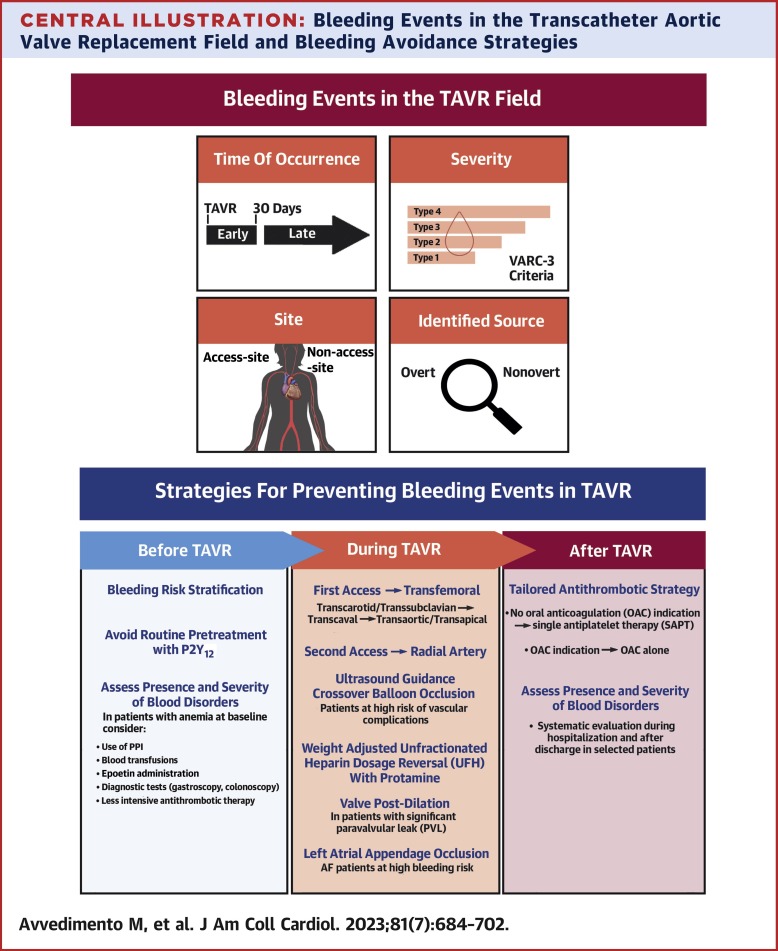
Bleeding risk derives from a combination of procedural factors, medical treatment, and patient characteristics and comorbidities. In the TAVR setting, its definition is extremely heterogeneous, based on the time of...
/>
Relevance: This review aims to provide an in-depth overview of bleeding events in the TAVR field, including definitions, timing and the extent of risk, and clinical impact, as well as updates on antithrombotic management and its potential influence on bleeding complications.

Temporal changes of patient characteristics over 12 years in a single-center transcatheter aortic valve implantation cohort - Clinical Research in Cardiology
Source : https://link.springer.com/article/10.1007/s00392-023-02166-8
Background Beneficial results of transcatheter aortic valve implantation (TAVI) compared to surgical aortic valve replacement (SAVR) in patients at all risk strata have led to substantial changes in guideline recommendations...
Conclusion: Despite substantial guideline alterations, median patient age remained largely unchanged in our TAVI cohort over the past 12 years. Therefore, increased age still appears to be the main reason to choose TAVI over SAVR. However, risk profiles declined substantially. Significant improvements in early outcomes suggest favorable...